
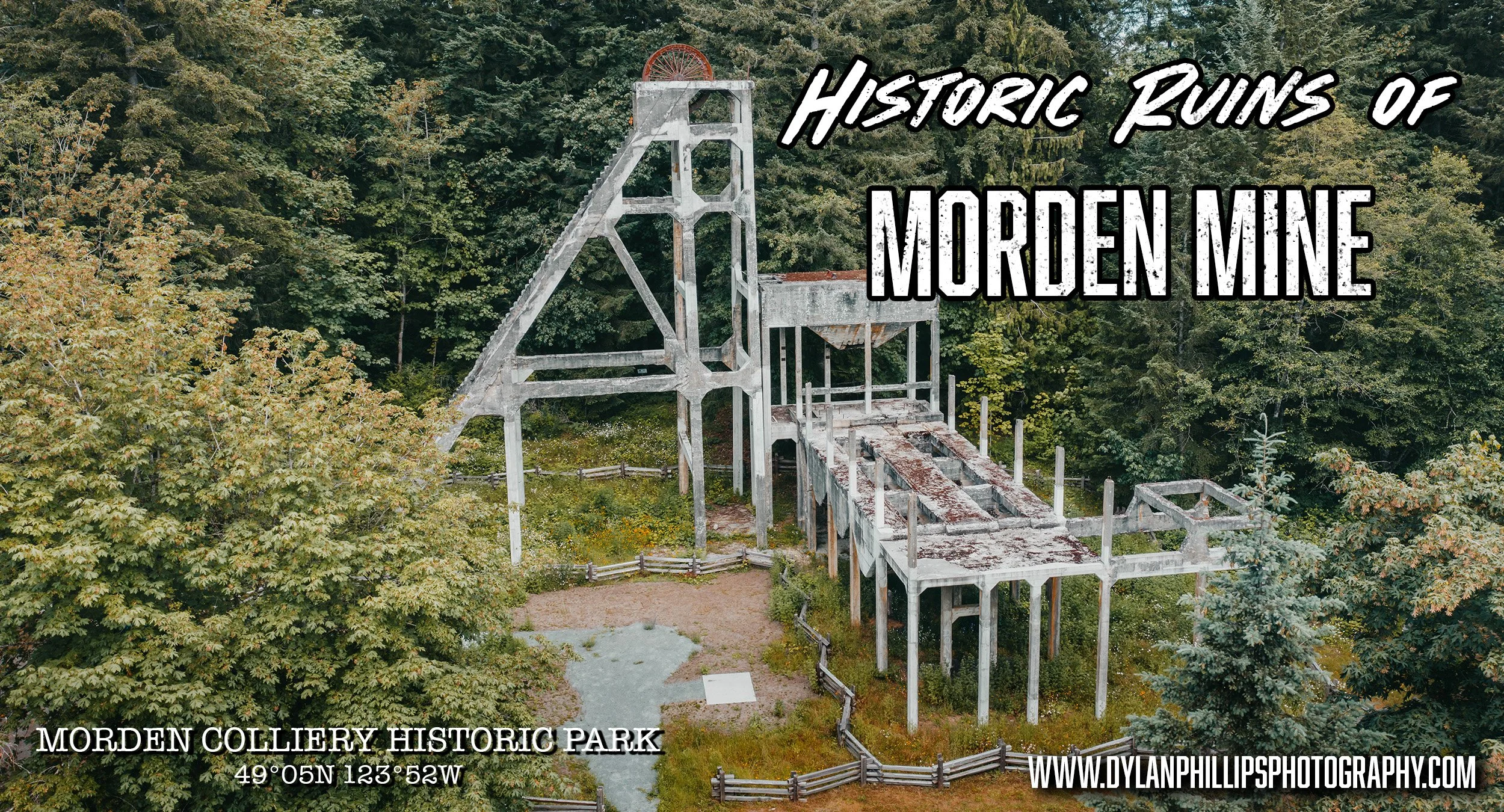
Morden Colliery Historic Provincial Park
A dominant relic of Vancouver Islands Coal Mining Legacy
What the hell is a Colliery?
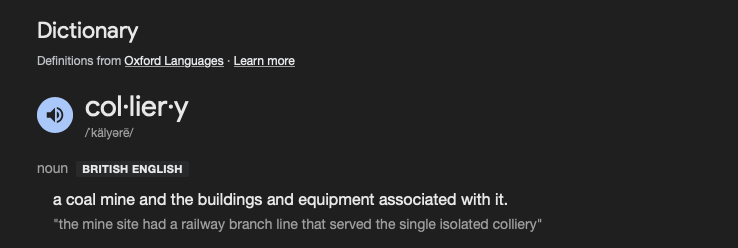
It’s a pretty strange word if you’ve never encountered it before. A “colliery”, sounds just like it’s spelled: call-e-airy. Despite this, I’ve heard exactly one person pronounce it properly in my entire life. Shout out to you, Will. To everyone else who calls it the “Collery Dam”…
Well, I’ll let old Biff say it for me:

That said, If you feel the need to avoid straight up ridicule from us locals, I suggest continuing (or starting) to pronounce Colliery Dam as “collery”.
All jokes aside, What is a colliery?
The Oxford dictionary defines a Colliery as:
“a coal mine and the buildings and equipment associated with it.”
Pretty straightforward, right?
Nanaimo’s Coal Mining History
Now that we’ve covered the grammar, it’s time for some history:
Coal mining in Nanaimo began modestly with the Hudson Bay Company around 1850. Over the next decade, a Scottish immigrant named Robert Dunsmuir began leaving his mark on the Vancouver Island Coal Mining industry. By the 1870s, Dunsmuir had formed his own company, The Wellington Colliery, operating in the area known as, you guessed it, Wellington.
Dunsmuir built an empire from these humble beginnings and significantly shaped the development of Vancouver Island. While his list of accomplishments is long, the E&N Railway and coinciding land grant are of significant importance here.
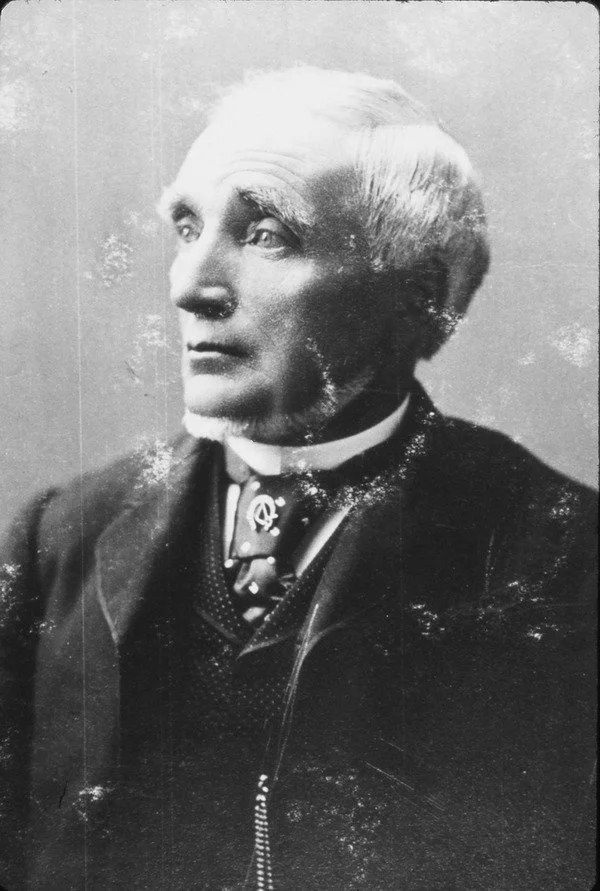
Portrait of Robert Dunsmuir – Vancouver Island University Collection
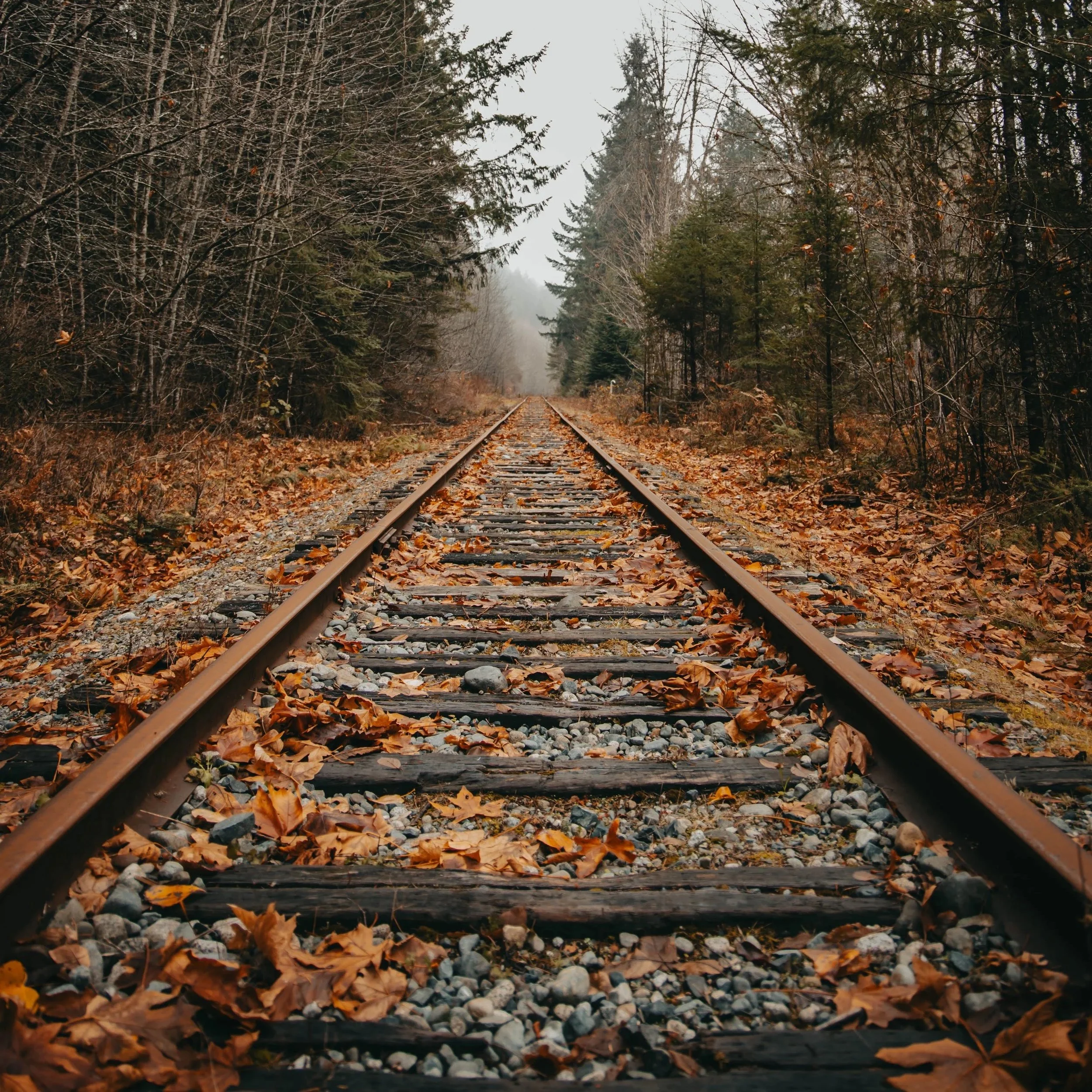
Esquimalt and Nanaimo Railway, Near South Wellington B.C - Dylan Phillips Photography
The Esquimalt and Nanaimo Railway
The origin story of the E&N Railway is complex and nuanced. It involves lots of bureaucracy and politics. That story is worthy of its own dedicated post, So I’ll try to keep this brief:
Federal government commitments to building a “Pacific Railway” were unfulfilled. Tensions rose between the federal and provincial governments, eventually resulting in British Columbia threatening to withdraw from the less than a decade-old Canadian Confederation.
With various collieries scattered around the Nanaimo area, Dunsmuir recognized his need for a significant network of railway to get his coal ore to port. Dunsmuir incorporated the Esquimalt and Nanaimo Railway with three partners and was eventually awarded the contract to construct his railway. The contract came with a massive land grant (approximately 20% of Vancouver Island’s land mass) that included mineral rights. There were, however, some exceptions.
Vancouver Island Settlers’ Rights Act
With the E&N Railway Company’s new claim to large swaths of land along the rail corridor granted by the Federal Government, many settlers were at risk of being displaced from their property. The Provincial Government enacted the Vancouver Island Settlers’ Rights Act in 1904 to protect settlers’ property rights, as long as they could prove occupancy prior to 1884. As part of these protections, settlers were allowed to retain mineral rights. It is because of this detail that, much to the chagrin of Robert Dunsmuir, other private mining companies began to pop up in the immediate vicinity of the E&N Railway.
Pacific Coast Coal Mines
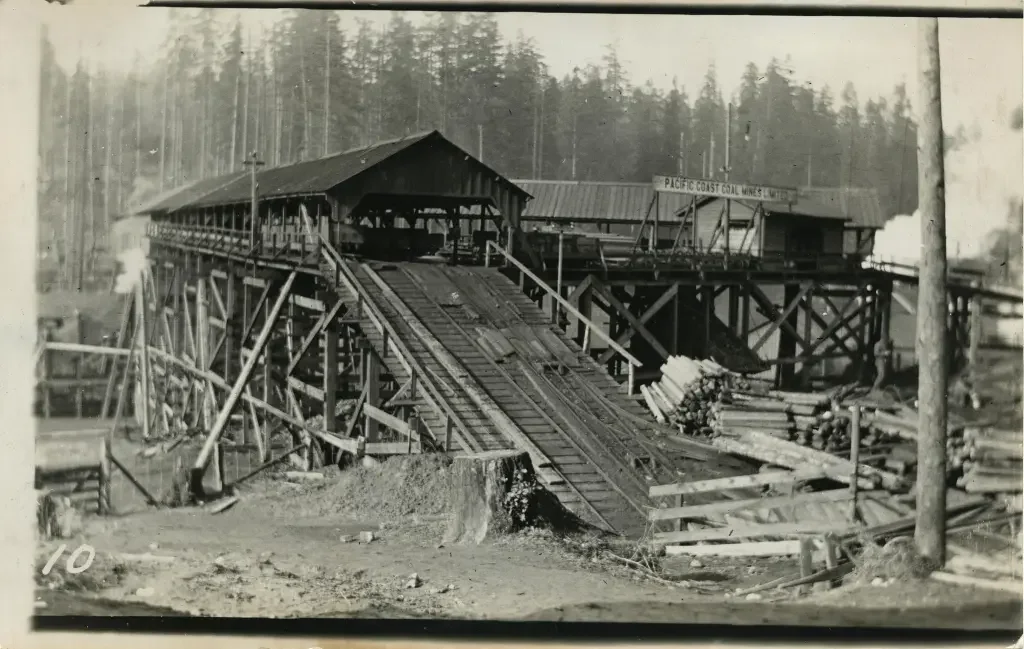
PCCM Fiddick Mine in South Wellington B.C - from the Uno Langmann Family Collection of B.C. Photographs
South Wellington, formerly known as Alexandra, was a bustling community situated south of Nanaimo along the E&N Railway. In 1907, a man named John Arbuthnot formed South Wellington Coal Mines Limited after securing mineral rights from some early South Wellington settlers. These mining rights included a 3-year lease on the 160-acre Fiddick property and a 20-year lease on the adjoining 320-acre Richardson property.
In 1909, Arbuthnot reorganized his company as Pacific Coast Coal Mines Ltd. or PCCM and opened a railway line from Fiddicks’ Junction to a coal wharf at Boat Harbour.
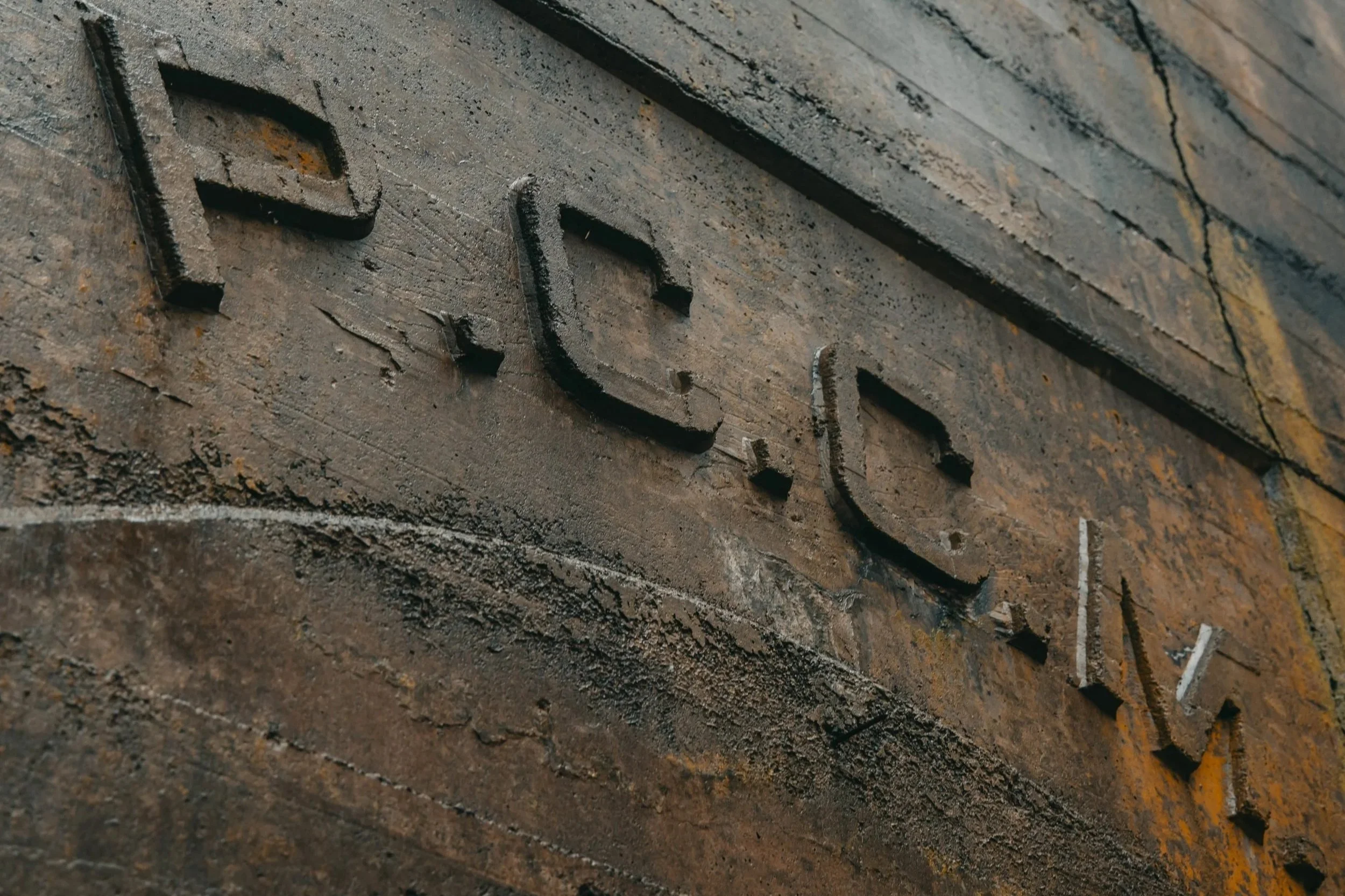
Close up of the PCCM stamping over the boiler house entrance - Dylan Phillips Photography

Show off your Wild Side with a Wild Portrait Experience
New Construction
In 1912, work commenced on two new shafts at Morden, along the existing PCCM railway line. Shafts #3 and #4 were named successively after the #1 and #2 shafts at Fiddick and Richardson mines. A yearlong miners’ strike over 1913-1914 halted production on the new shafts, causing them to flood. During this time, the 22.7-metre concrete headframe was constructed.
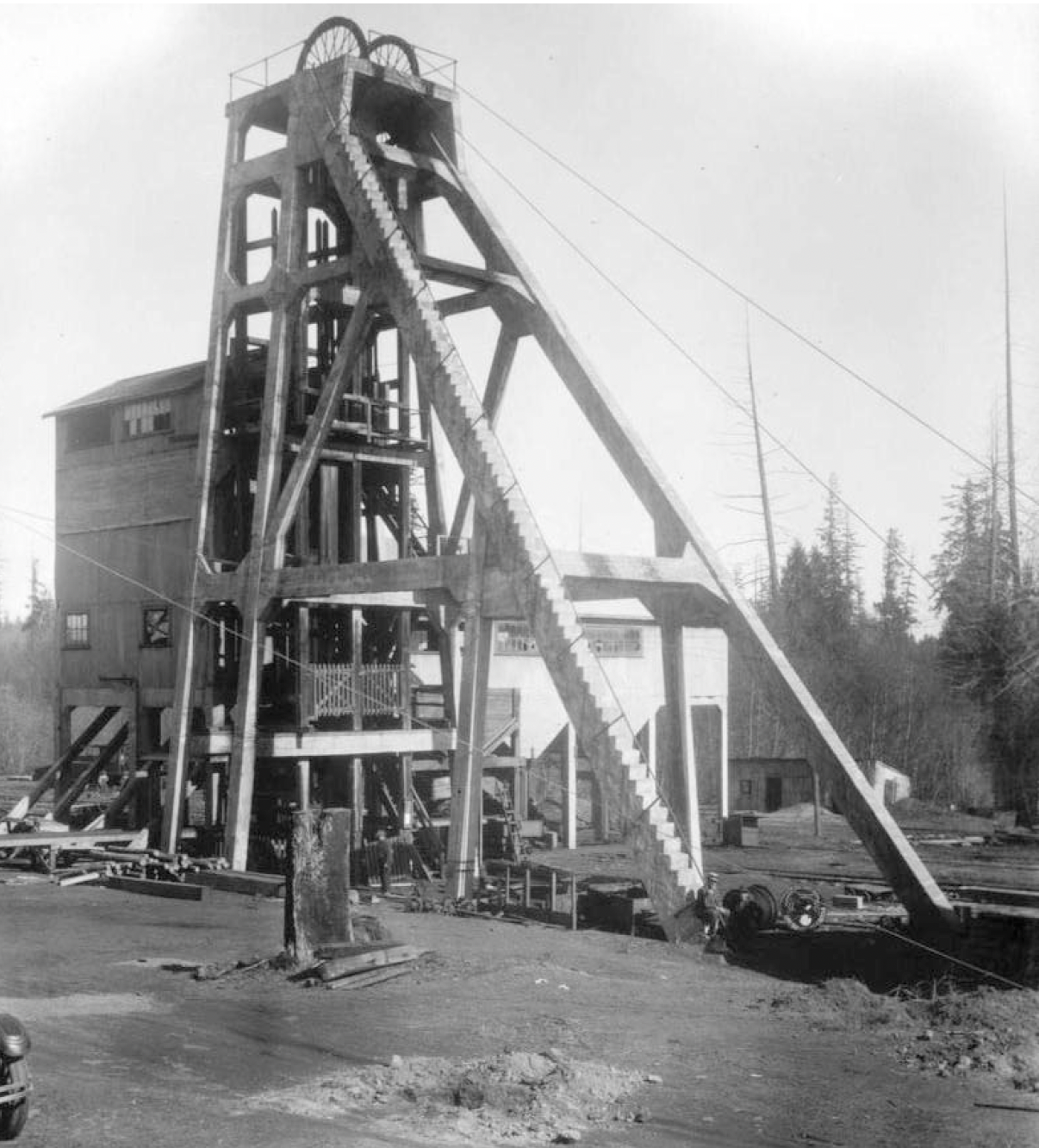
Morden Mine in operation - Historical photo, source unknown
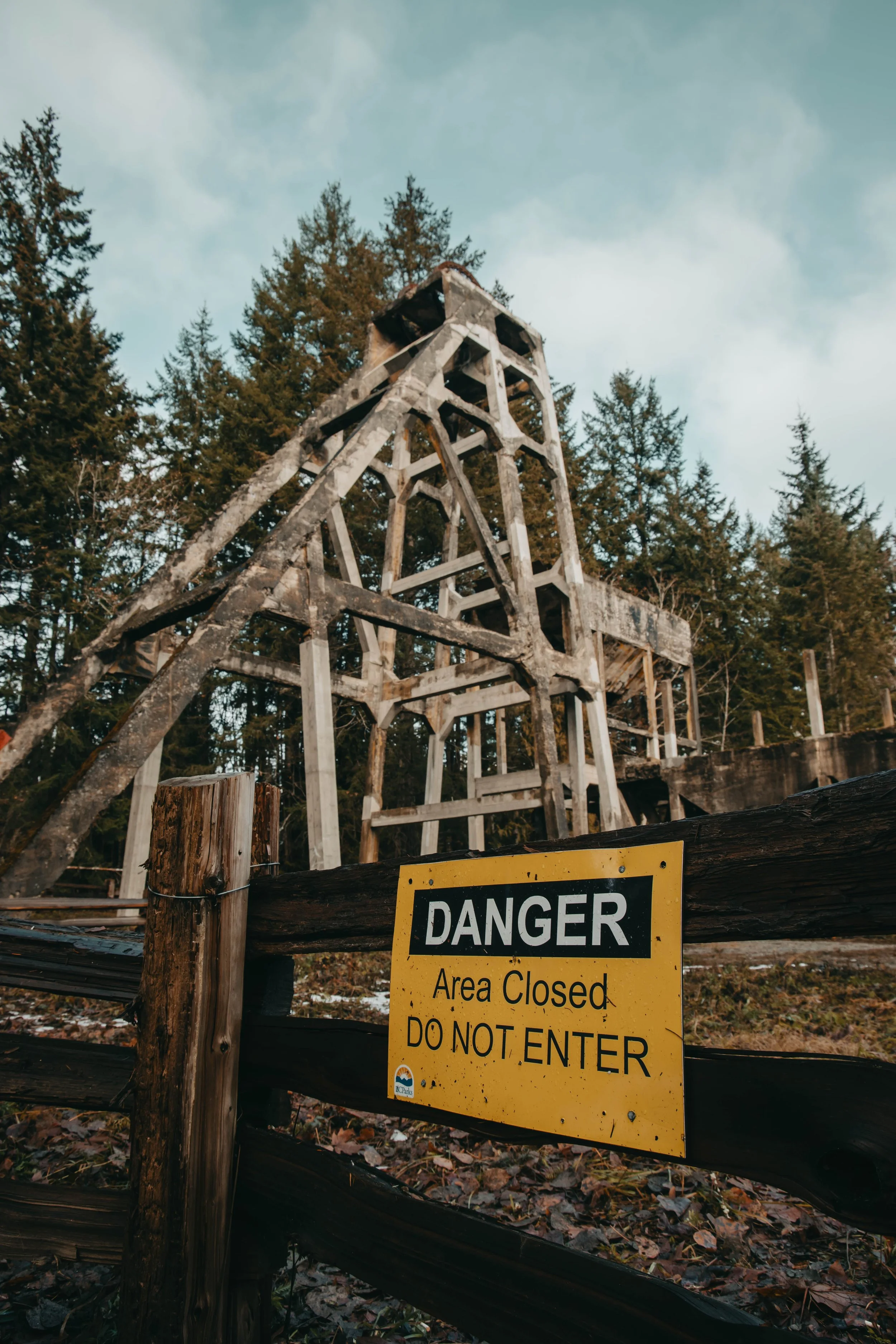
Danger signs at Morden Colliery Historic Park - Dylan Phillips Photography
Disaster Strikes
On 9 February, 1915, a surveying error resulted in workers blasting through to an abandoned and flooded working, resulting in the rapid flooding of Fiddick mine, killing 19 men. The Fiddick mine would close by 1917, the same year that production at Morden commenced.
A detailed account of the 1915 Fiddick Mine Disaster can be found here courtesy of the Ladysmith Historical Society.
Morden Colliery
Through 1919, extensive underground development continued at Morden Mine. The same year, a water tower, 14 cottages, two 8-room residences, and a 32-person boarding house were relocated to Morden from the nearby Fiddick Mine, which had been abandoned.
The mine’s main shaft (#3) was 9’x16’ wide and sunk to a surface depth of 600’ to reach an 8-foot coal seam. One-ton capacity buckets were hoisted up the shaft by 24”x48” steam engines built by Leitchfield Engineering Co. The coal would then be dumped into the tipple and loaded into waiting railway cars. These cars would follow the PCCM track across the Nanaimo River and through Cedar to nearby Boat Harbour.
The #4 Shaft, directly behind the main shaft, was primarily used for ventilation as well as emergency rescue. The airshaft head frame was, like many others, constructed with wood. Today, only the foundations remain.
For many years, the ventilation fan blades lay in the grass behind a chain-link fence. This fan blade, or one very similar, may still be viewable at the nearby Extension Miners Community Park.
A 60-foot smoke stack once stood behind the head frame as part of the boiler house–the power plant for the entire mine site. Three 150 horsepower Goldie & McCulloch boilers provided the power for all ventilation, pumps, heating, lighting, as well as the steam hoists used to raise and lower buckets through the 600’ deep shafts.
Morden Mine only operated for a couple of years before closing in 1921. By 1922, PCCM had entered bankruptcy.
In 1930, Canadian Coal and Iron Co. reopened the mine but shut down operations within a year, marking the definitive end of coal production at Morden Mine.
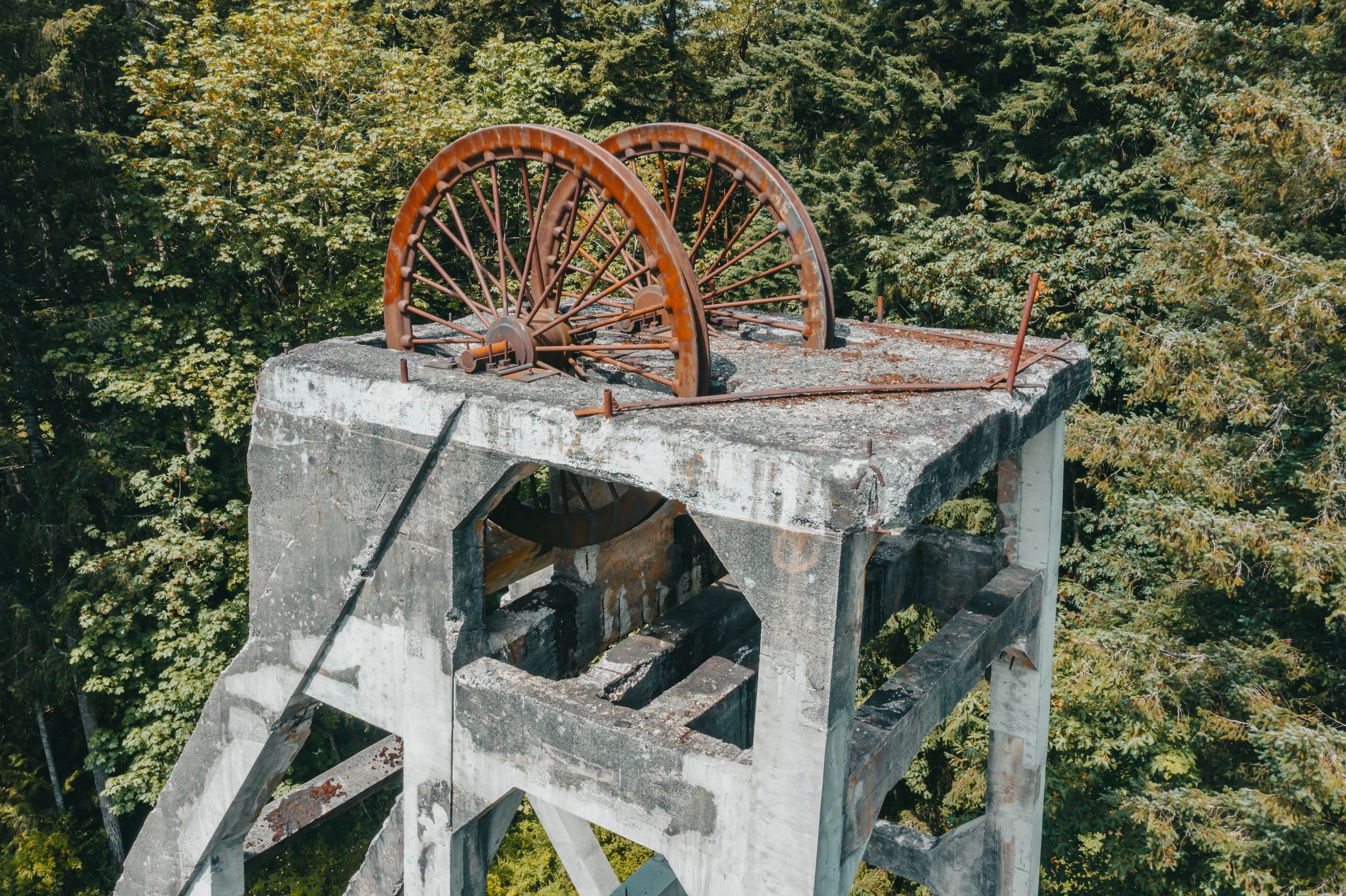
Cable drive pulley at the top of Morden Mine Headframe - Dylan Phillips Photography
Designation as a National Historic Site
Decades after the mines’ closure, the concrete head frame continued to stand tall above the once bustling mine site.
In 1972, Morden Colliery was recognized as a National Historic Site and designated as a Provincial Park. Despite this, the park received little attention. The head frame, protected only by a chain-link fence, began to fall into disrepair.
Friends of Morden Mine
Fortunately, a community of people felt that the Morden head frame structure was worth preserving. In 2003, the Friends of Morden Mine (FOMM) society was formed. For years, the FOMM rallied for the preservation of the site, finally securing a $1.4 million grant from the province. Friends of Morden Mine coordinated a massive concrete restoration of the head frame, utilizing 16 shipping containers and scaffolding to stabilize the structure.
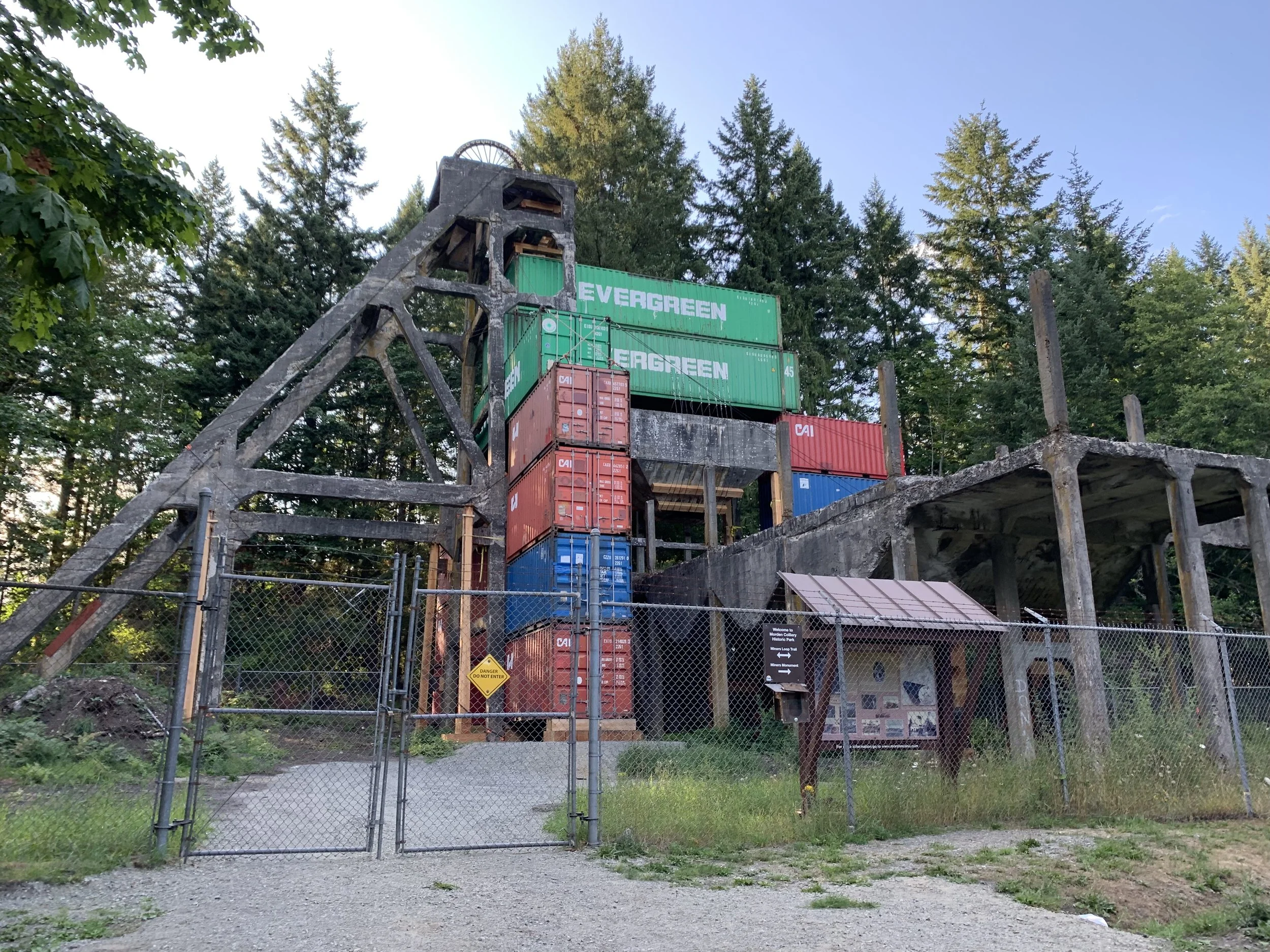
Morden Mine restoration project - Dylan Phillips Photography
Morden Mine Today
Following the concrete restoration project in 2019, improvements to the park have been made. Finally, the concrete headframe has been freed from its chain-link prison. Today, a wooden fence is all that stands between an observer and the structure and I have to say, as a photographer – I’m a big fan of that! Picnic tables have been a nice addition, allowing visitors to sit and have lunch at the site.
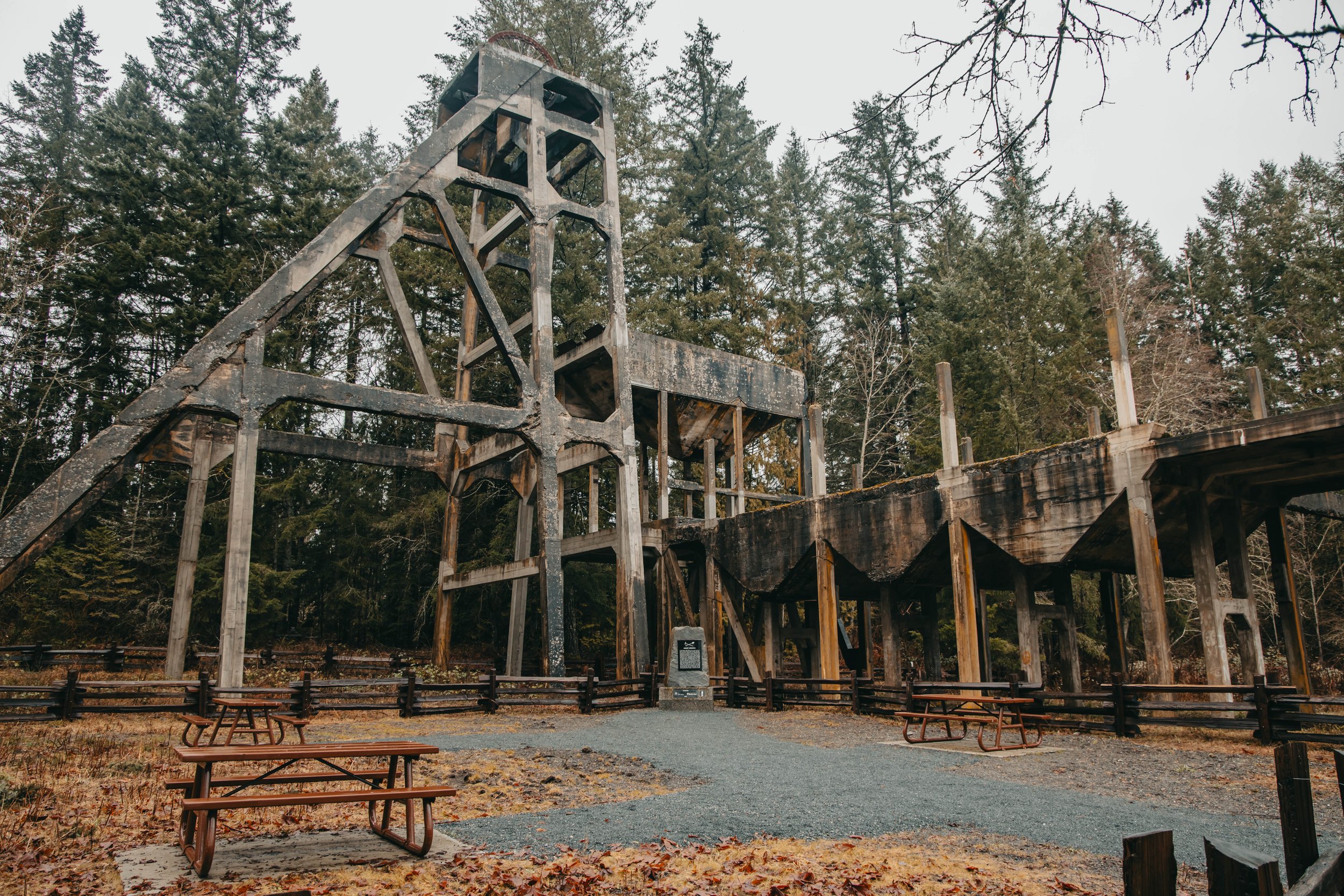
Recent upgrades to the Morden Colliery Historic Park - Dylan Phillips Photography
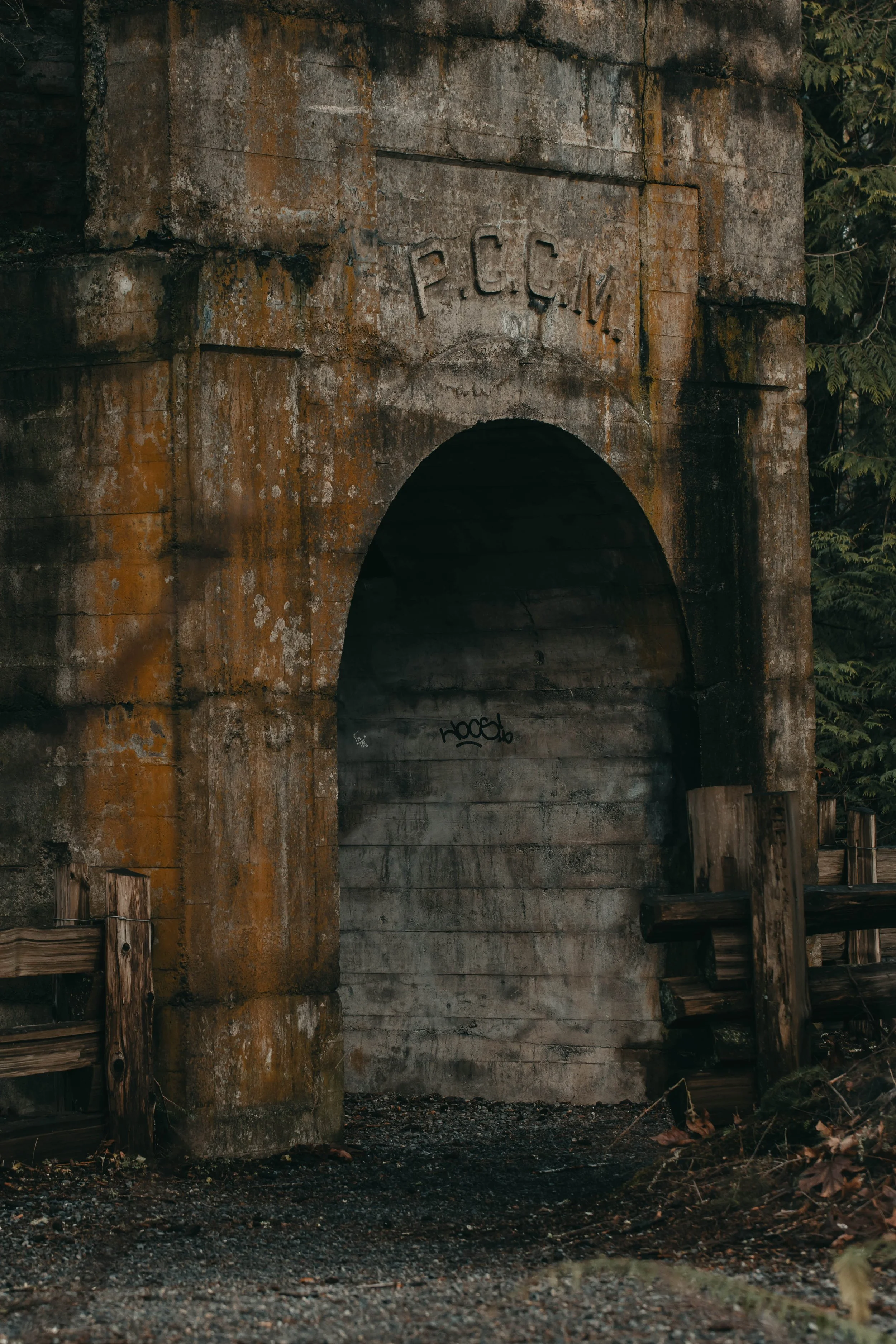
Arched entrance to the PCCM Morden boiler house - Dylan Phillips Photography
A short “Miners Trail” takes you through the forest and behind the headframe. Along this route, you can spot several of the ruined foundations from old buildings as well as an impressive arch structure that was the base of the boiler plants’ smokestack.
Following the old railway line is a short walk that dead-ends at the river. Along the way, you can find discarded sections of rail as well as small pieces of coal ore that would have fallen out of the rail cars.
My Personal Connection to Morden Mine
Phew. That’s quite the history lesson. Hopefully, you’re still with me.
I chose to write about Morden Mine not only for its historical significance or its imposing nature. Morden Mine is particularly special to me. I first visited Morden back in high school with one of my good friends who grew up in the area. This was long before the restoration efforts, so the impressive structure was more of a ruin guarded by a chain-link fence. My obsession with coal mining history was in full swing back then, and I had only seen Morden in my local history books. I remember feeling surprised that this monstrous relic, overgrown and deteriorating, was so vastly unappreciated.
After moving to the community of South Wellington in 2018, Morden has become one of my regular walks. I enjoy the wooded trails along the old PCCM railway in all four seasons. In the fall, I like to sit by the river and watch the flurry of activity that comes with the annual salmon run. In the spring, the trail is buzzing with birdsong. Even on those rare occasions when we get an overnight dump of snow, I enjoy the muffled silence of the forest.
While I have enjoyed all the upgrades to the park over the last few years, its increase in popularity has brought much more traffic to the area. With the proposed plan to build (technically rebuild) a bridge over the Nanaimo River and connect the Cedar side of the trail, this route will undoubtedly get much busier.
Want a piece of history?
My favourite photo of Morden Colliery is available in my print shop
Adding it to your home helps support local art and preserves Vancouver Island’s History.
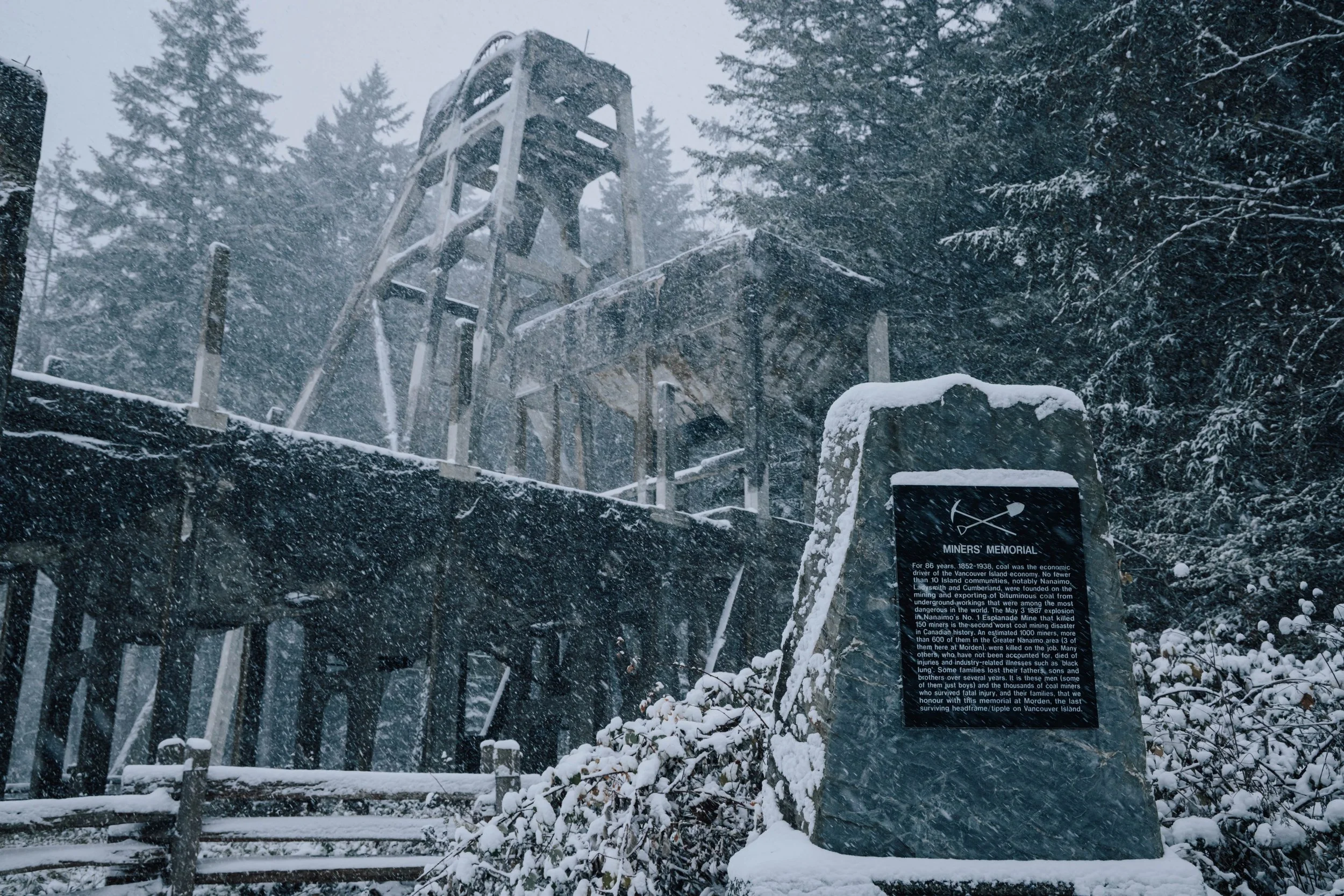
The Miners Memorial Cairn
For better or worse, Coal mining put Nanaimo on the map and for over a century it was the primary industry that put food on the tables for many Vancouver Island families. Each day the men below ground faced innumerable hazards, including but not limited to: methane gas explosions, coal dust ignitions, hydrogen sulphide (H2S) Exposure, collapsed ceilings, flooding, and a variety of industrial accidents. Maybe worse than all of these are the lingering effects of coal dust on the body, the proverbial “Black Lung”, quietly suffered by those that survived the veritable gauntlet below the surface.
Nanaimo’s mines earned a reputation for being exceptionally hazardous.
Many men gambled their lives in these mines in an effort to provide a better life for their families. While Morden suffered no catastrophic accidents, 3 men are recorded to have lost their lives here. I’ve not encountered the details of these accidents in my research.
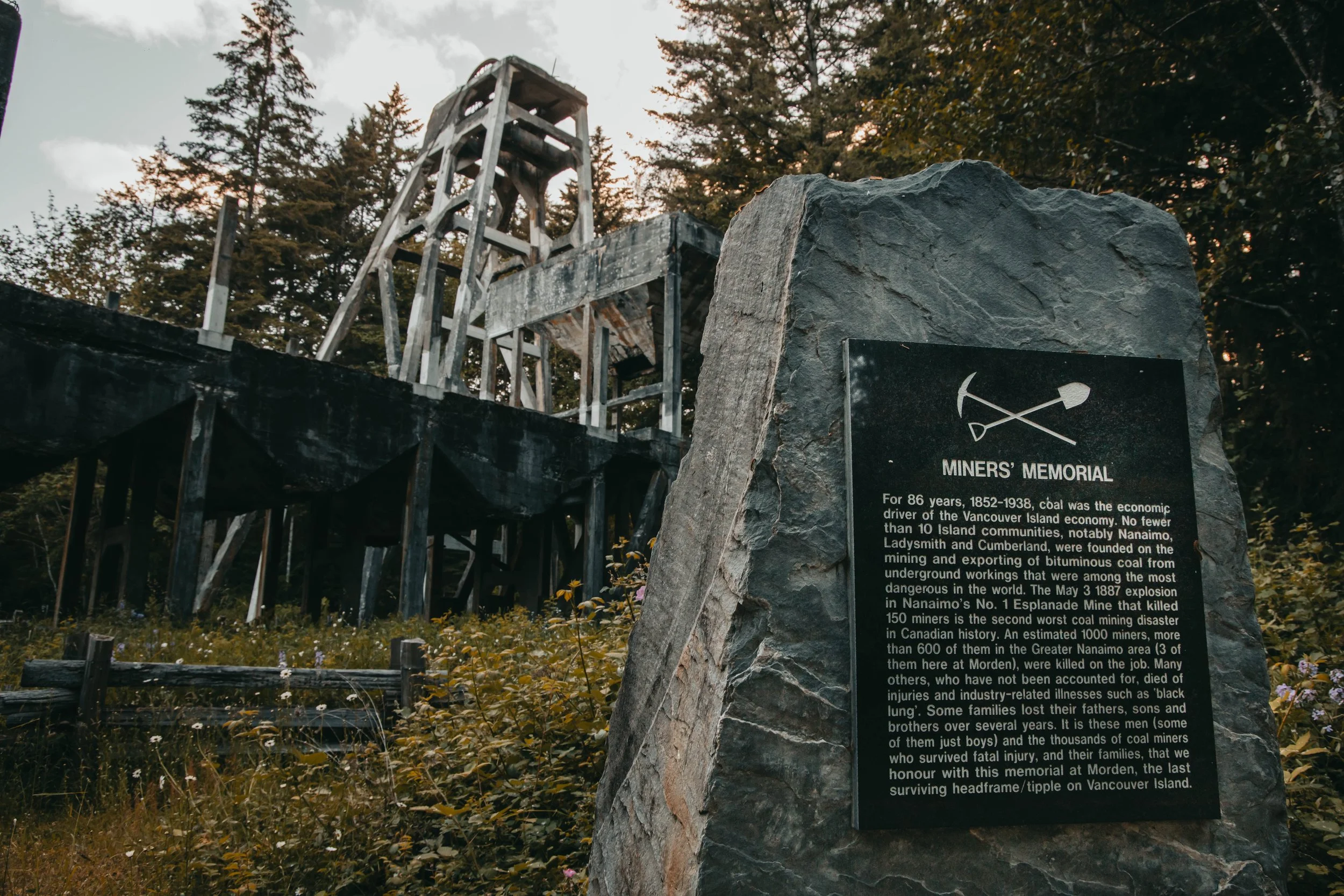
Miners memorial cairn at Morden Colliery Historic Provincial Park - Dylan Phillips Photography
At the time of writing, Morden’s historic headframe is one of only two such structures still standing in North America. Its American counterpart is the O’Gara No. 14 Mine in Muddy, Illinois.
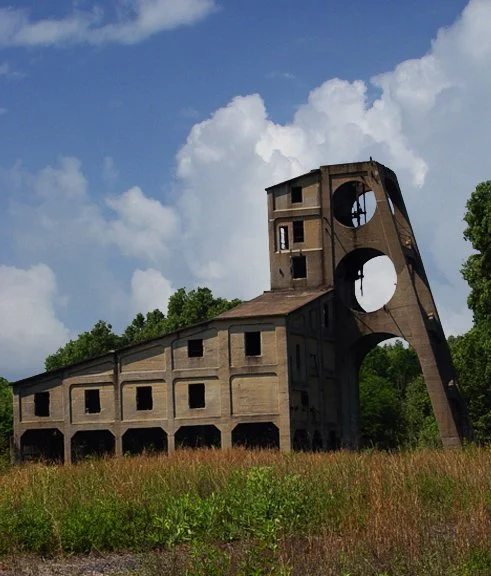
O’Gara #12 Coal Mine, Muddy Illinois - Ruhe1986, Public domain, via Wikimedia Commons
Visiting Tips and Etiquette
Stay outside of the fenced area. The 600’ deep mine shaft still exists. A few inches of concrete is all that exists between you and a long drop with a sudden stop.
Stay on the trails – this is a protected historic site. Do not dig or disturb the area.
Respect private land; leave no trace and be mindful of the environment.
The boundaries of Morden Colliery Provincial Park & Morden Colliery Regional Trail are relatively narrow. Private property exists on both sides of the park. Visitors are asked to keep their pets on leash and stay on the designated trails.
Capture Your Own Vancouver Island Story
Exploring places like Morden Colliery reminds me why I love photographing on Vancouver Island. Each ruin, forest trail and coastline offers stories waiting to be told. If this inspires you, let’s plan a Wild Portrait Session together. I’ll guide you to locations that match your story and capture portraits that feel like you.
If you’ve enjoyed this post, follow my adventures on Facebook or Instagram, or browse more prints and stories on my website.
Have a story about Morden Colliery? Share it in the comments!
You might also enjoy:
“Rising above the forest near South Wellington, the headframe at Morden Colliery is one of the last visible relics of Vancouver Island’s coal mining era. In this post, Vancouver Island photographer Dylan Phillips explores the history of the mine, the tragedy that struck here in 1912, and his own connection to one of the island’s most haunting industrial landmarks.”